
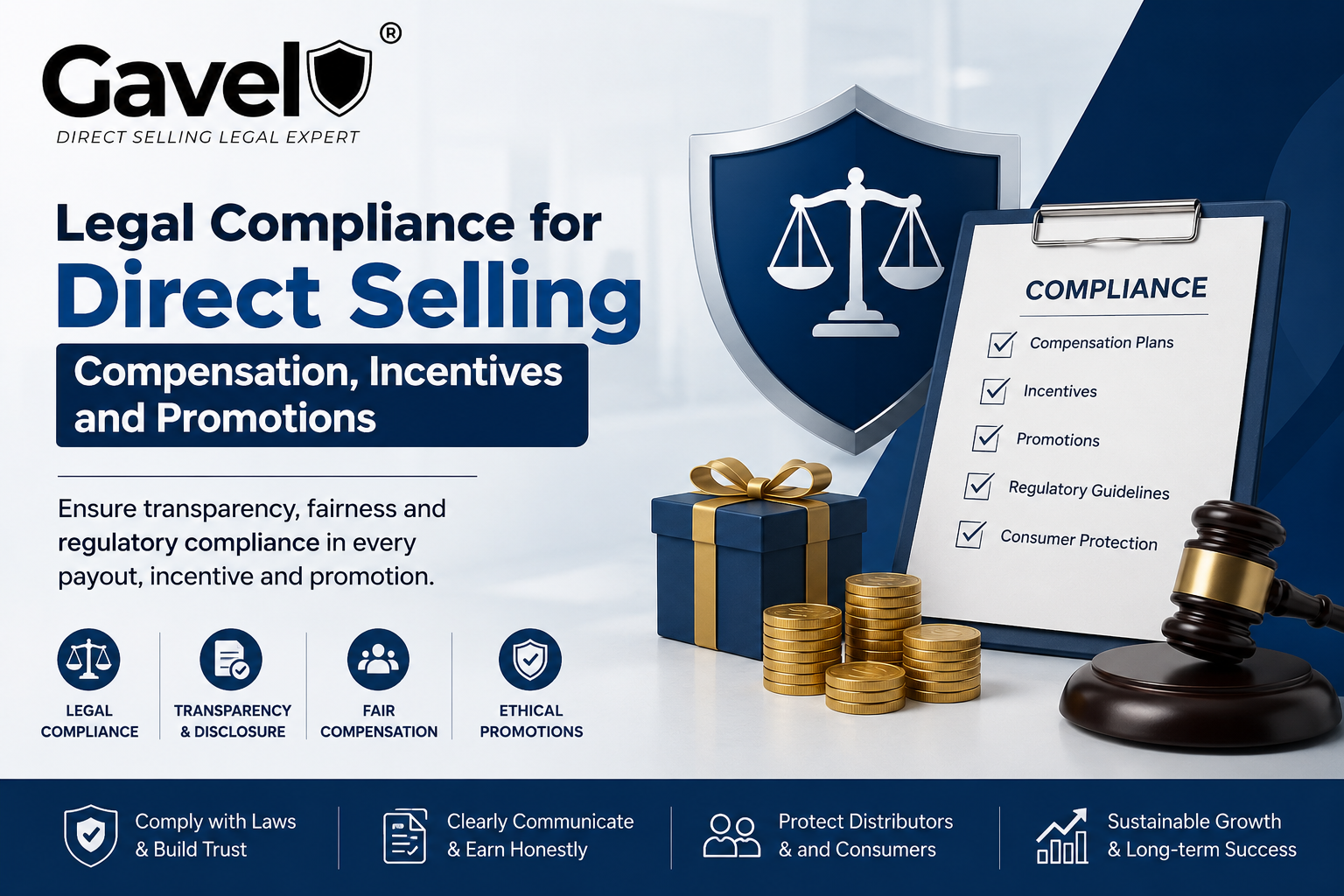
Legal Compliance for Direct Selling Compensation, Incentives and Promotions
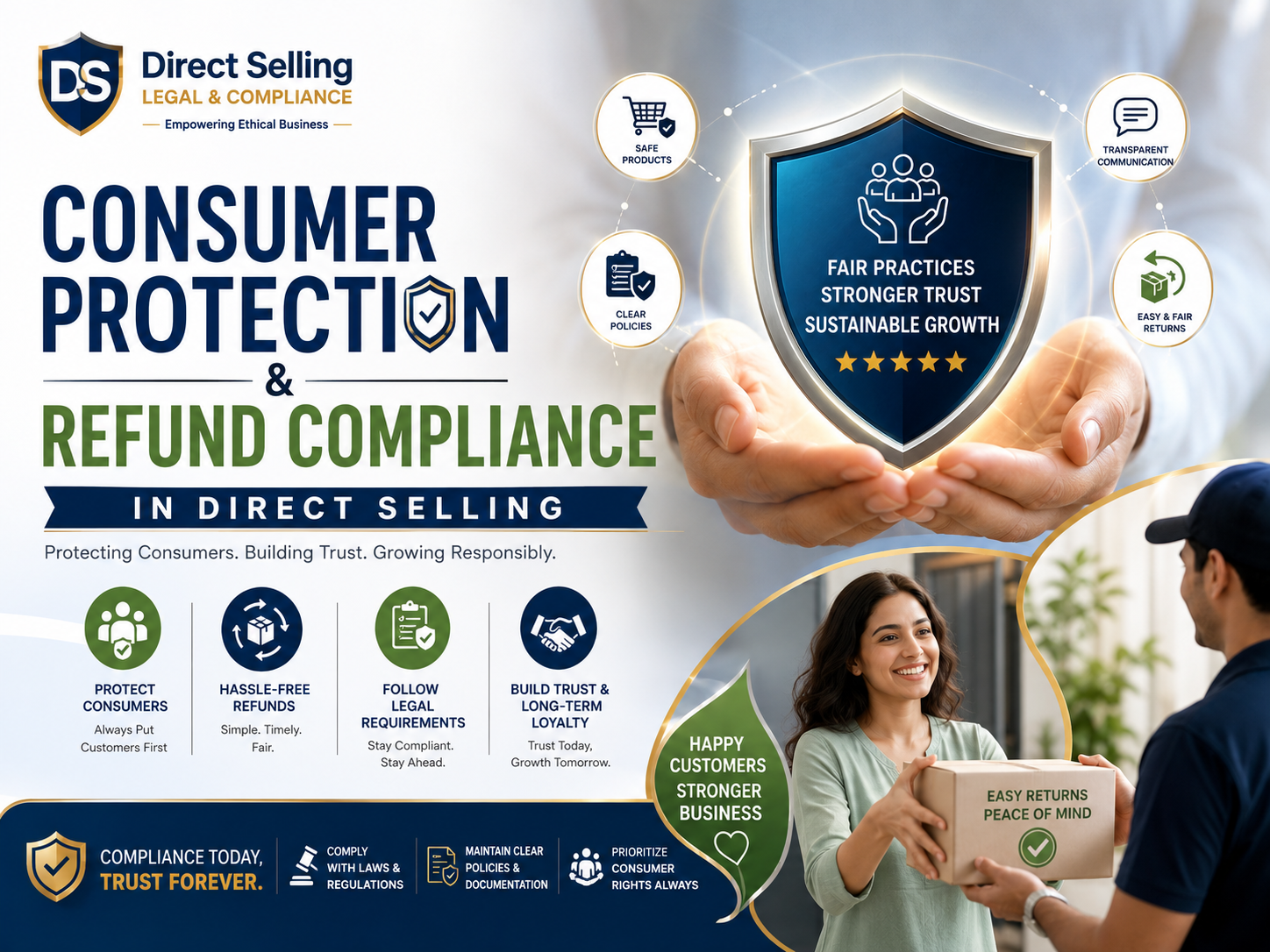
Direct selling businesses operate in a consumer-focused environment where transparency, fair business practices, product quality, and effective grievance redressal are essential. A well-designed consumer protection and refund framework not only helps businesses meet regulatory expectations but also builds trust among consumers and direct sellers.
In India, direct selling entities should pay particular attention to the Consumer Protection Act, 2019, the Consumer Protection (Direct Selling) Rules, 2021, applicable e-commerce and advertising requirements, and other laws relevant to the products being sold.
1. Transparent Product Information
Direct selling companies should provide consumers with clear and accurate information about their products. Important details may include:
- Product name and description
- Price and applicable taxes
- Quantity, ingredients, or material information where applicable
- Usage instructions
- Warnings and precautions
- Manufacturing and expiry information where applicable
- Warranty or guarantee terms
- Return, refund, replacement, and cancellation conditions
Product claims should be truthful, supportable, and consistent with applicable laws.
2. Clear Refund and Return Policy
A direct selling company should establish a written refund and return policy that is easy for consumers and direct sellers to understand.
The policy should clearly explain:
- When a product can be returned
- The applicable return period
- Conditions for accepting a return
- Refund eligibility
- Replacement procedures
- Shipping or return-related responsibilities
- Refund processing timelines
- Procedure for raising a complaint
The refund policy should not contain unfair or misleading conditions that undermine applicable consumer rights.
3. Cooling-Off and Cancellation Rights
Where applicable, businesses should provide appropriate cancellation, return, or cooling-off mechanisms in accordance with the governing legal framework and their contractual terms.
Consumers should be able to understand how to cancel an order or request a return without having to navigate unnecessarily complicated procedures.
4. Grievance Redressal Mechanism
A compliant direct selling business should maintain an effective consumer grievance mechanism.
The company should provide accessible contact details and establish an internal process for:
- Receiving consumer complaints
- Recording complaint details
- Acknowledging the complaint
- Investigating the issue
- Providing an appropriate resolution
- Maintaining records of the complaint and resolution
A designated grievance officer or responsible compliance function can help ensure that complaints are handled systematically.
5. Protection Against Misleading Claims
Direct sellers should not make false, exaggerated, or unsupported claims about products, health benefits, income opportunities, discounts, or expected results.
Companies should establish marketing guidelines and monitor distributor communications, including:
- Social media posts
- WhatsApp promotions
- Product demonstrations
- Presentations
- Testimonials
- Income claims
- Advertisements
Training and approval procedures can reduce the risk of misleading representations.
6. Proper Documentation and Record Keeping
Companies should maintain appropriate records relating to consumer transactions and complaints.
Important records may include:
- Invoices and purchase records
- Return and refund requests
- Complaint records
- Refund processing records
- Distributor/customer communications
- Product information
- Warranty documents
- Grievance resolutions
Proper documentation helps demonstrate that the company has established and followed appropriate consumer protection procedures.
7. Fair Treatment of Consumers
Consumer protection should be incorporated into the company's overall compliance framework. Direct selling entities should avoid practices that could unfairly restrict consumers from exercising legitimate rights.
Terms and conditions should be written in clear language, and material conditions should not be hidden in complicated documentation.
8. Distributor Training
Compliance cannot depend only on the company's written policies. Direct sellers should also understand their responsibilities.
Training should cover:
- Product representations
- Advertising restrictions
- Refund and return procedures
- Customer communication
- Complaint handling
- Prohibited business practices
- Income and opportunity claims
- Data protection responsibilities
Regular compliance training can help reduce risks created by unauthorized statements or practices.
9. Monitoring Refund and Complaint Trends
Companies should periodically review refund requests and consumer complaints to identify recurring problems.
For example, a high number of returns for a particular product may indicate:
- Product quality issues
- Incorrect product descriptions
- Poor customer understanding
- Inappropriate sales practices
- Packaging or delivery problems
Using complaint and refund data as a compliance monitoring tool can help businesses improve both customer experience and regulatory controls.
10. Build a Consumer-First Compliance Framework
Consumer protection should be treated as an ongoing compliance responsibility rather than simply a refund policy.
A strong framework should combine:
- Clear product information
- Fair contractual terms
- Transparent refund and return procedures
- Effective grievance redressal
- Accurate advertising
- Distributor training
- Proper record keeping
- Periodic compliance audits
Conclusion
Consumer protection and refund compliance are important components of a sustainable direct selling business. Companies that provide transparent product information, fair refund mechanisms, accessible grievance channels, and proper distributor training can reduce regulatory risk while strengthening consumer confidence.
Because requirements can vary depending on the product category and business model, direct selling entities should periodically review their policies against applicable Indian laws and obtain professional legal advice where necessary.



.png)