

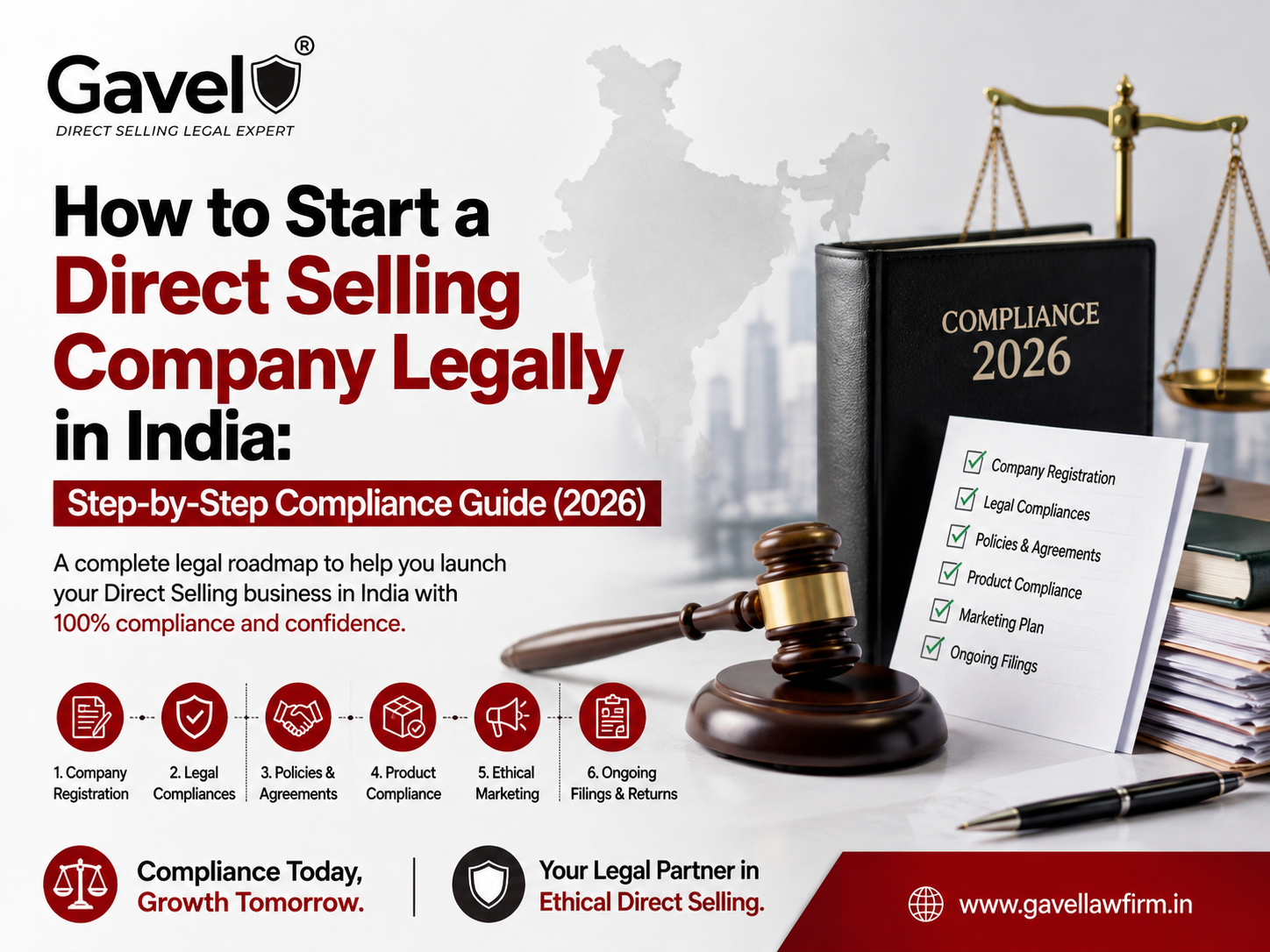
How to Start a Direct Selling Company Legally in India: Step-by-Step Compliance Guide (2026)
A direct selling business needs more than a good product and a strong sales network. It also needs clear policies that explain how the company, distributors, sellers, and customers should work with each other. Well-drafted policies can help a business create consistent procedures and reduce confusion in day-to-day operations.
Direct Selling Policy Drafting is therefore an important part of setting up and managing a professional direct selling or MLM business in India. A properly prepared policy can cover distributor conduct, sales practices, product information, payments, returns, complaints, ethical marketing, and compliance responsibilities.
For a growing direct selling company, policies should be easy to understand, practical to follow, and aligned with the company's actual business model.
Why Does a Direct Selling Company Need Clear Policies?
A direct selling company may have hundreds or thousands of distributors operating in different locations. Without consistent policies, different distributors may follow different practices while communicating with customers or promoting products.
A clear policy framework can help the company establish common standards for:
- Distributor conduct
- Product selling
- Customer communication
- Advertising
- Income claims
- Payments and commissions
- Product returns
- Complaints and grievances
- Distributor responsibilities
- Confidential information
- Business ethics
Policies can also help distributors understand what they can and cannot do while representing the company.
What Is Direct Selling Policy Drafting?
Direct Selling Policy Drafting involves preparing written rules and procedures for the operation of a direct selling business.
These policies should be developed according to the company's business structure and applicable legal requirements. A policy should not simply be copied from another company because every business can have different products, compensation systems, distributor relationships, and customer processes.
A professional policy drafting process considers the company's actual operations and creates documents that are practical for both the business and its distributors.
Key Policies a Direct Selling Company May Need
A company may require several policies depending on its products, business model, distributor structure, and operational requirements.
Distributor Code of Conduct
A distributor code of conduct explains the standards that distributors are expected to follow.
It can cover appropriate customer communication, ethical sales practices, prohibited conduct, company representation, use of marketing material, and compliance with company rules.
Clear conduct rules can help businesses maintain consistent standards across their distributor network.
Customer Return and Refund Policy
A transparent return and refund policy is important for customer confidence.
The policy should explain applicable conditions, timelines, procedures, eligible products, and the process for raising a return or refund request.
The policy should also be consistent with the company's actual customer service process.
Distributor Agreement and Policy
A distributor agreement establishes the contractual relationship between the company and the distributor. However, supporting policies may provide additional operational rules.
The documents should work together instead of containing conflicting provisions.
Advertising and Marketing Policy
Distributors may promote products through websites, social media, messaging platforms, events, or personal networks.
A marketing policy can establish rules for:
- Product claims
- Income representations
- Social media promotions
- Use of company logos
- Promotional material
- Customer testimonials
- Before-and-after claims
- Unauthorized advertisements
This can help reduce the risk of distributors making statements that the company cannot support.
How Should a Direct Selling Policy Be Drafted?
Effective Direct Selling Policy Drafting should begin with an understanding of the business rather than immediately preparing standard documents.
Understand the Business Model
The first step is to understand how the company sells its products or services.
Important areas may include product categories, customer transactions, distributor recruitment, commission structure, payment procedures, sales channels, and return processes.
Identify Compliance Requirements
The policy should be prepared after considering the legal and regulatory requirements applicable to the business.
The company's activities, product category, sales process, advertising methods, and distributor structure may all affect the policies required.
Create Clear and Simple Rules
Policies should be understandable to the people who will actually use them.
Long and complicated language can make compliance difficult. Important requirements should be written clearly so distributors and employees know what is expected from them.
Align Policies With Contracts
A policy should not contradict the distributor agreement or other company documents.
For example, if the distributor agreement provides one procedure for termination while the policy states another, it can create confusion and potential disputes.
Legal review can help ensure that important documents are consistent.
Why Is Policy Consistency Important?
A direct selling business may use several legal and operational documents at the same time.
These can include:
- Distributor agreements
- Compensation plans
- Customer terms
- Return policies
- Privacy policies
- Marketing guidelines
- Code of conduct
- Compliance manuals
If these documents contain different rules, distributors may not know which requirement to follow.
A professional policy review can help identify inconsistencies before they become operational problems.
Common Mistakes in Direct Selling Policies
Businesses sometimes focus on creating policies quickly and overlook important details.
Some common mistakes include:
Using generic templates: A policy copied from another business may not match the company's actual operations.
Unclear distributor obligations: Distributors should know what conduct is expected from them.
Unsupported income claims: Policies should address how distributors communicate earning opportunities.
Conflicting documents: Agreements, compensation plans, and policies should work together.
No update process: Business practices and legal requirements can change, so policies may need periodic review.
Overly complicated language: Policies should be legally sound but still understandable to their intended users.
When Should a Company Update Its Direct Selling Policies?
Policy drafting is not necessarily a one-time activity.
A company may need to review or update its policies when:
- It launches a new product
- Its compensation plan changes
- It enters a new market
- Distributor agreements are updated
- Its sales process changes
- New digital marketing channels are introduced
- Customer complaint procedures change
- Applicable legal requirements change
- Internal compliance issues are identified
Regular review can help keep policies aligned with the company's current business practices.
How Gavel Law Firm Can Help
Gavel Law Firm can assist MLM and direct selling businesses with legal documentation and compliance-related requirements.
Professional Direct Selling Policy Drafting can help a company develop policies based on its business model, distributor structure, customer processes, compensation system, and operational requirements.
The review may include distributor policies, code of conduct, marketing rules, return and refund provisions, customer-facing terms, and related compliance documentation.
The objective is to create policies that are clear, practical, consistent, and suitable for the company's operations.
For businesses planning to start a direct selling company or improve their existing compliance framework, professional legal guidance can help identify gaps and create stronger documentation.
Conclusion
Clear policies can provide an important foundation for a professional direct selling business. They help explain expectations to distributors, create consistent procedures, support customer confidence, and reduce confusion in everyday operations.
Direct Selling Policy Drafting should therefore be approached as part of the company's overall legal and compliance strategy.
From distributor conduct and advertising rules to returns, complaints, and business ethics, each policy should be prepared according to the company's actual operations and applicable requirements.
With professional legal support from Gavel Law Firm, direct selling and MLM businesses can work toward creating a more organized and legally considered policy framework.


.png)