

How Multi-Level Marketing Works: A Simple Explanation
How to Create a Legally Compliant MLM Compensation Plan in India
The success of any MLM (Multi-Level Marketing) or Direct Selling company depends largely on its compensation plan. A well-designed compensation plan motivates distributors, encourages product sales, and supports business growth. However, if the compensation structure is not legally compliant, the business may face regulatory scrutiny and allegations of operating a pyramid scheme.
Many entrepreneurs focus on commissions, bonuses, and recruitment strategies without understanding the legal implications. Under India's regulatory framework, compensation plans must be designed around genuine product sales and consumer protection principles.
At Gavel Law Firm, we regularly assist direct selling companies in reviewing, drafting, and auditing MLM compensation plans to ensure compliance with applicable laws and regulations.
What is an MLM Compensation Plan?
An MLM compensation plan is the framework that determines how distributors earn income within a direct selling business.
The plan typically includes:
- Retail profit margins
- Direct sales commissions
- Team performance bonuses
- Leadership incentives
- Rank advancement rewards
A legally compliant compensation plan should primarily reward actual product sales rather than recruitment activities.
Why Compensation Plans Face Legal Scrutiny
Regulators closely examine compensation plans because many illegal pyramid schemes disguise themselves as MLM businesses.
Authorities generally assess whether:
- Income is linked to genuine product sales
- Consumers receive value from purchased products
- Earnings are not dependent solely on recruitment
- The business follows direct selling regulations
When compensation plans focus excessively on enrollment fees or recruitment incentives, they may attract legal concerns.
Essential Elements of a Legally Compliant MLM Compensation Plan
1. Product-Centric Revenue Model
The foundation of every compliant MLM business should be the sale of legitimate products or services.
A compensation plan should reward:
- Retail sales
- Customer acquisition
- Product consumption
- Repeat customer purchases
Revenue generated primarily through product sales helps establish business legitimacy.
2. Transparent Commission Structure
Distributors should clearly understand:
- How commissions are calculated
- Qualification requirements
- Bonus eligibility criteria
- Payment timelines
Transparent compensation structures help reduce disputes and improve trust.
3. Retail Sales Emphasis
A healthy direct selling company generates substantial revenue from retail customers rather than internal distributor purchases.
Companies should encourage:
- Customer acquisition
- Product education
- Retail sales growth
- Consumer retention
4. Fair Rank Advancement System
Promotions and leadership levels should be based on measurable business performance.
Examples include:
- Sales volume
- Customer retention
- Team productivity
- Product distribution
Rank advancement should never depend solely on recruitment numbers.
5. Refund and Buyback Policies
Consumer-friendly policies are essential for legal compliance.
Companies should establish:
- Product return policies
- Distributor buyback programs
- Refund procedures
- Complaint resolution systems
Such policies demonstrate commitment to consumer protection.
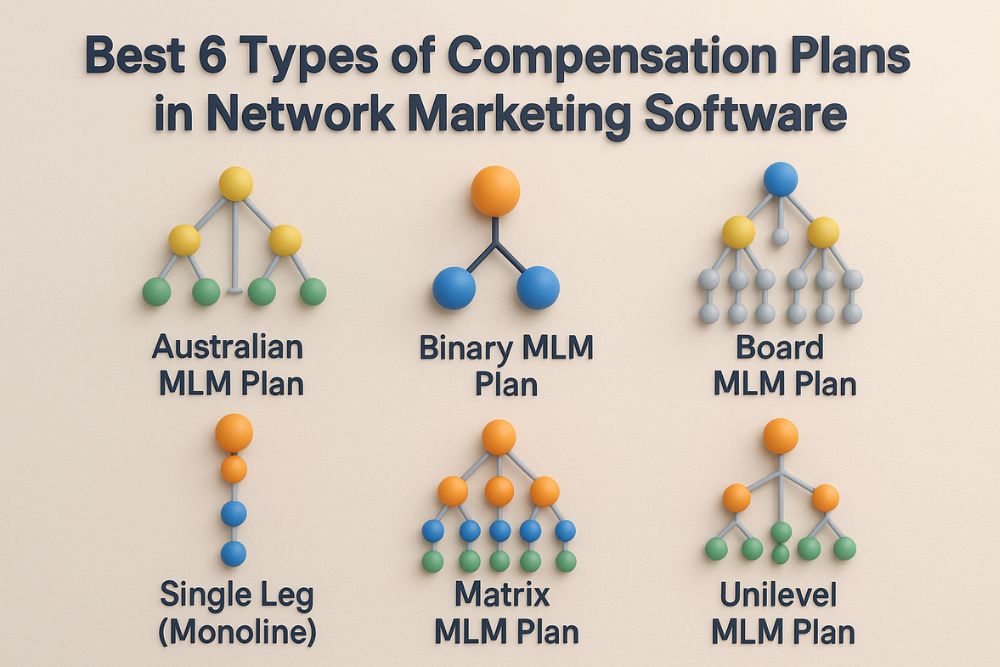
Common MLM Compensation Structures
Binary Compensation Plan
In a binary model, distributors build two teams and earn commissions based on team performance.
Advantages:
- Simple structure
- Team-building incentives
- Fast growth potential
However, legal compliance depends on ensuring earnings are tied to product sales rather than recruitment.
Unilevel Compensation Plan
The unilevel structure allows distributors to sponsor multiple frontline members.
Benefits include:
- Easy management
- Transparent earnings
- Flexible expansion
It remains one of the most commonly used compensation models in direct selling.
Matrix Compensation Plan
A matrix structure limits the number of positions available at each level.
This model offers:
- Controlled growth
- Predictable payouts
- Balanced team structures
Proper legal review is important before implementation.
Hybrid Compensation Plan
Many modern MLM companies combine multiple compensation structures.
A hybrid plan may include:
- Retail commissions
- Leadership bonuses
- Team performance rewards
- Customer acquisition incentives
The complexity of hybrid models makes legal evaluation especially important.
Red Flags That Can Make an MLM Compensation Plan Illegal
Recruitment-Based Earnings
If distributors earn primarily from enrolling new members rather than selling products, the business may face allegations of operating a pyramid scheme.
Mandatory Joining Purchases
Forcing distributors to purchase expensive starter kits or inventory packages can create compliance concerns.
Unrealistic Income Claims
Promoting exaggerated earnings without proper substantiation may expose businesses to regulatory action and consumer complaints.
Inventory Loading
Encouraging distributors to purchase excessive inventory merely to qualify for commissions is a major compliance risk.
Lack of Retail Customers
A compensation structure that depends primarily on internal purchases rather than external consumers may face increased scrutiny.
Direct Selling Rules 2021 and Compensation Plans
Direct selling businesses should ensure their compensation plans align with applicable regulatory requirements.
Key compliance considerations include:
- Transparency in operations
- Consumer protection mechanisms
- Fair business practices
- Proper distributor agreements
- Product-focused compensation structures
Companies should periodically review their compensation plans to identify and address compliance gaps.
MLM Compensation Plan Audit Checklist
Before launching or modifying a compensation plan, businesses should review:
✔ Product-based earning opportunities
✔ Retail customer sales mechanisms
✔ Commission transparency
✔ Bonus qualification criteria
✔ Refund and buyback policies
✔ Income disclosure practices
✔ Distributor agreements
✔ Consumer protection measures
✔ Marketing claim compliance
✔ Regulatory risk assessment
How Gavel Law Firm Helps MLM Companies
Designing a compensation plan requires both business strategy and legal expertise.
Gavel Law Firm assists direct selling and MLM companies with:
- Compensation Plan Drafting
- Legal Compliance Audits
- Direct Selling Documentation
- Distributor Agreement Drafting
- Business Structure Review
- Regulatory Compliance Assessment
- Risk Management Advisory
Our legal team works closely with entrepreneurs and established direct selling companies to develop compliant and sustainable business models.
Conclusion
An MLM compensation plan is more than a sales strategy—it is one of the most important legal foundations of a direct selling business. A well-structured compensation model promotes growth while reducing regulatory risks.
Businesses that prioritize transparency, genuine product sales, and consumer protection are better positioned for long-term success.
Before launching or revising your compensation structure, seeking professional legal guidance can help identify potential compliance risks and strengthen your business framework.
Gavel Law Firm provides legal support to MLM and direct selling companies across India, helping businesses build compliant compensation plans and sustainable growth strategies.



.png)