why direct selling companies need direct selling law firm
Who Is a Direct Seller? Rights & Responsibilities
A Complete Legal & Practical Guide for Every Direct Selling Company and Direct Seller in India
The direct selling company model has become one of the fastest-growing business formats in India. Thousands of people associate daily with a direct selling company to earn income, build networks, and sell quality products. However, lack of legal awareness often puts both the direct selling company and the direct seller at risk. To run a lawful, sustainable, and trusted direct selling company, it is essential to clearly understand who a direct seller is, along with their rights and responsibilities.
This detailed guide explains the concept from a legal, operational, and compliance perspective, specially written for every direct selling company, distributor, and aspiring direct seller.
Who Is a Direct Seller Under Indian Law?
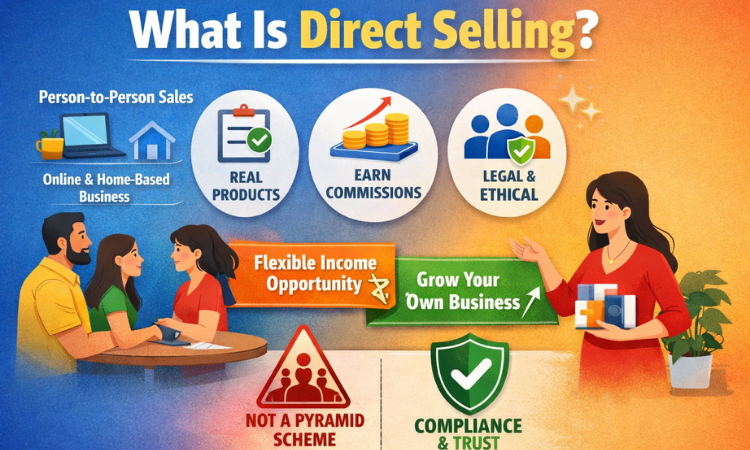
A Direct Seller is an individual authorized by a direct selling company to sell or distribute its products or services directly to consumers, without using a permanent retail shop. A direct seller operates independently but under the framework, policies, and compensation plan of a direct selling company.
A direct seller:
-
Is not an employee of a direct selling company
-
Earns commission or incentives based on product sales
-
Works under a written agreement with a direct selling company
-
Promotes products through personal contact, online platforms, or demonstrations
Every lawful direct selling company must maintain records of its direct sellers and ensure that they operate in compliance with the Direct Selling Rules.
All Direct Selling Rules - Direct Selling Rules
Role of a Direct Selling Company in Defining a Direct Seller
A direct selling company plays a critical role in defining, training, and regulating its direct sellers. A compliant direct selling company must ensure that:
-
Direct sellers are enrolled through a written contract
-
No entry fee or illegal consideration is charged
-
Earnings are based on product sales, not recruitment
-
Proper training and compliance awareness is provided
If a direct selling company fails in these duties, both the company and its direct sellers can face legal consequences.
Legal Framework Governing Direct Sellers and Direct Selling Company
In India, every direct selling company and direct seller is governed by the Direct Selling Rules, 2021, issued under the Consumer Protection Act. These rules were introduced to eliminate fraud, pyramid schemes, and unethical practices in the direct selling company ecosystem.
Under these rules:
-
A direct selling company must be legally registered
-
A direct selling company must maintain a grievance redressal system
-
A direct selling company must ensure ethical conduct by direct sellers
-
A direct seller must follow consumer protection norms
Only those working with a compliant direct selling company are considered lawful direct sellers.
Also Read - Direct Selling Rules 2021 Definitions
Rights of a Direct Seller in a Direct Selling Company
Every direct seller associated with a direct selling company enjoys specific legal and contractual rights.
1. Right to Transparency from the Direct Selling Company
A direct selling company must clearly disclose:
-
Product pricing and quality
-
Compensation and incentive structure
-
Sales targets and payout cycles
-
Exit and termination policies
Transparency is mandatory for every direct selling company.
2. Right to Written Agreement
A direct seller has the right to a written agreement with the direct selling company clearly defining:
-
Roles and responsibilities
-
Commission structure
-
Dispute resolution mechanism
-
Grounds for termination
Without a written agreement, the direct selling company may be considered non-compliant.
3. Right to Timely Payment
A direct selling company must pay commissions and incentives accurately and on time. Arbitrary deductions or delays by a direct selling company can attract legal action.
4. Right to Buy-Back and Exit
A direct selling company must provide a buy-back or return option for unsold products when a direct seller exits, subject to reasonable conditions.
5. Right to Grievance Redressal
Every direct selling company must establish a grievance redressal mechanism for direct sellers and consumers.
Responsibilities of a Direct Seller Towards a Direct Selling Company
While a direct selling company has obligations, a direct seller also carries significant responsibilities.
1. Ethical Selling Practices
A direct seller must not:
-
Make false income promises
-
Misrepresent product benefits
-
Give misleading health or financial claims
Such actions can expose the direct selling company to regulatory scrutiny.
2. Compliance with Direct Selling Company Policies
A direct seller must follow:
-
Code of conduct of the direct selling company
-
Consumer protection guidelines
-
Tax and invoicing norms
Violation by a direct seller can impact the entire direct selling company.
3. Product-Centric Promotion
A direct selling company is legal only when income is driven by product sales. A direct seller must focus on selling products, not merely recruiting people.
4. No Coercion or Pressure
A direct seller must not force anyone to purchase products or join a direct selling company.
5. Responsible Use of Brand Name
A direct seller must not misuse the name, logo, or reputation of the direct selling company for personal gain or misleading promotions.
Difference Between a Direct Seller and an Employee of a Direct Selling Company
Understanding this distinction is crucial:
| Direct Seller | Employee |
|---|---|
| Independent | Employer-controlled |
| Commission-based | Salary-based |
| No fixed hours | Fixed working hours |
| Business risk involved | No business risk |
A direct selling company must clearly communicate this difference to avoid labor law disputes.
Why Compliance Matters for Every Direct Selling Company
A non-compliant direct seller can cause:
-
Legal notices against the direct selling company
-
Consumer complaints and penalties
-
Reputation damage to the direct selling company
-
Allegations of pyramid or illegal schemes
Therefore, every direct selling company must educate its direct sellers about rights, responsibilities, and legal boundaries.
Common Misunderstandings About Direct Sellers and Direct Selling Company
-
Not every direct selling company is illegal
-
Not every direct seller is part of a scam
-
Registration alone does not make a direct selling company lawful
-
Compliance and ethical practices define legitimacy
A compliant direct selling company focuses on transparency, products, and consumer trust.
Conclusion: Strong Direct Sellers Build Strong Direct Selling Companies
A direct selling company grows sustainably only when its direct sellers are aware, ethical, and legally compliant. A direct seller is not merely a salesperson but an independent business participant whose actions directly impact the credibility of the direct selling company.
Understanding who a direct seller is, along with their rights and responsibilities, is the foundation of a lawful and successful direct selling company in India. When both the direct selling company and the direct seller operate within the legal framework, the industry thrives, consumers stay protected, and long-term growth becomes possible.
Why Legal Awareness Matters for Every Direct Selling Company
Every direct selling company in India must ensure that its direct sellers are legally trained, contractually protected, and compliance-ready. Lack of awareness about direct seller rights and responsibilities can expose a direct selling company to regulatory action, penalties, consumer complaints, and allegations of illegal business practices.
If you are:
-
Starting a direct selling company
-
Managing a growing direct selling company
-
Drafting direct seller agreements
-
Facing compliance or notice-related issues
-
Wanting to build a 100% legally compliant direct selling company
Then legal structuring and compliance guidance becomes critical.
???? Connect with a Gavel Direct Selling Legal Expert
???? https://gavellawfirm.in/contact-us.php
A legally strong direct selling company is built on compliance, transparency, and informed direct sellers.

.png)